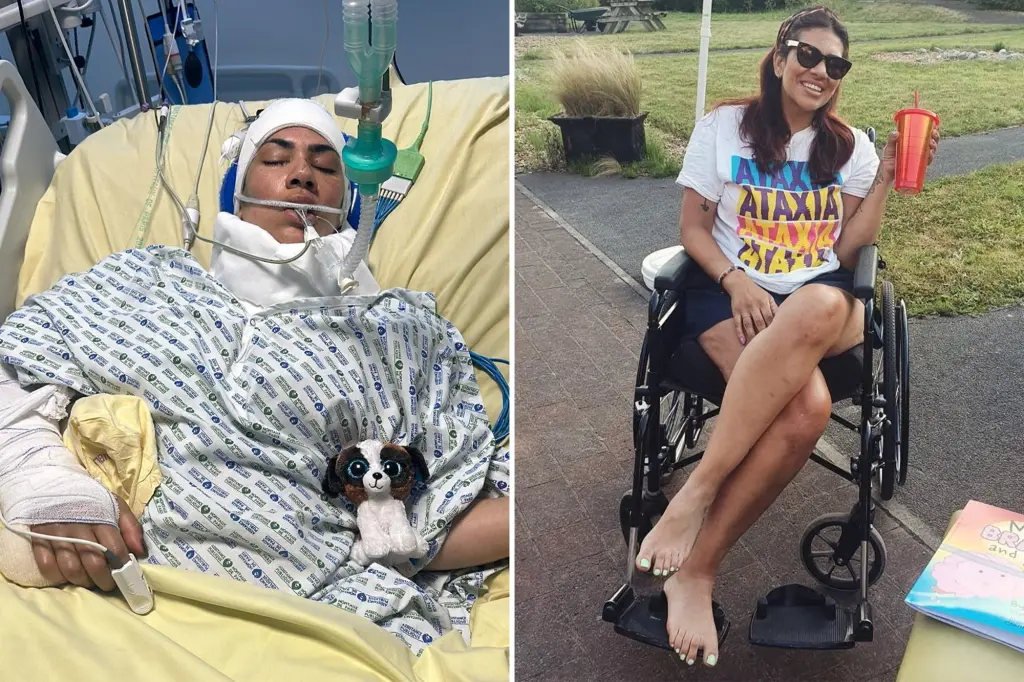
More than a year after a night that changed everything, 44-year-old Raina Heverin from Liverpool is still rebuilding her life one careful step at a time. In April 2025, during what was meant to be a relaxed long weekend in Paris with her brother and sister-in-law, the mother of two suffered a devastating fall that left her with a life-altering brain injury.
Heverin had spent the day exploring the city, shopping, and even buying a new pair of running shoes. That evening she swapped bedrooms with her relatives because traffic noise outside her original room was keeping her awake. Later that night, in a room with a Juliet balcony and an open window, something went terribly wrong. She believes she was either sleepwalking or severely disoriented after a sleepless previous night. She fell roughly 40 feet — the equivalent of two to three storeys — into the courtyard below.
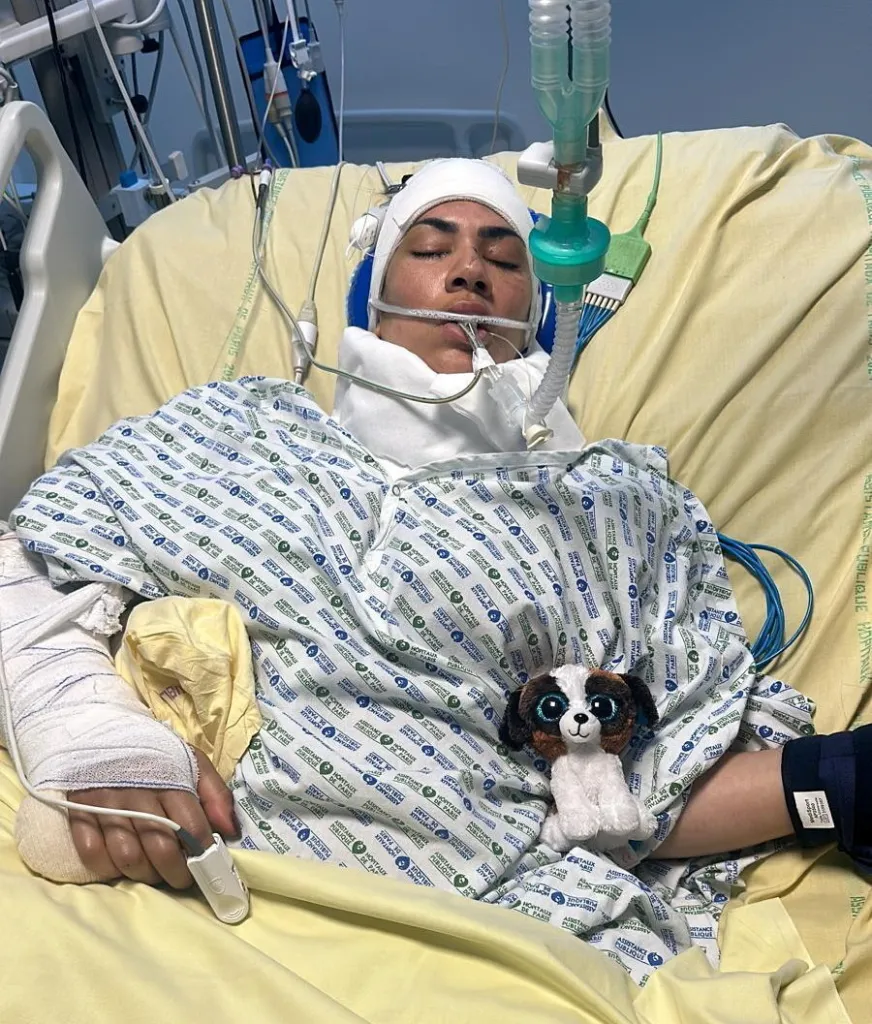
Her brother discovered her the following morning. He first noticed her new trainers still by the door and assumed she had risen early for a run, something completely in character for the fitness-focused mother. When he looked out, he found her lying motionless in the courtyard, appearing almost as if she were simply asleep.
The impact caused extensive trauma. Heverin suffered a broken arm and wrist, a shattered hip, multiple broken ribs, a punctured lung, and critical damage to her brain stem, including lesions that affected sensation on both sides of her body and her ability to speak. She also developed ataxia, a neurological condition that disrupts balance, coordination, muscle control, and speech, stemming from injury to the cerebellum and brain stem. Doctors later described her injuries as polytrauma — multiple traumatic injuries affecting different systems of the body at once.
She spent nearly three weeks to almost a month in a coma in a French hospital, dependent on machines to keep her breathing. She finally woke on 17 May 2025. Her first clear memory is of her husband Michael sitting beside her and reading aloud from a book she found so uninteresting that she wondered why he was subjecting her to it. French police questioned her brother and sister-in-law while she fought for her life.
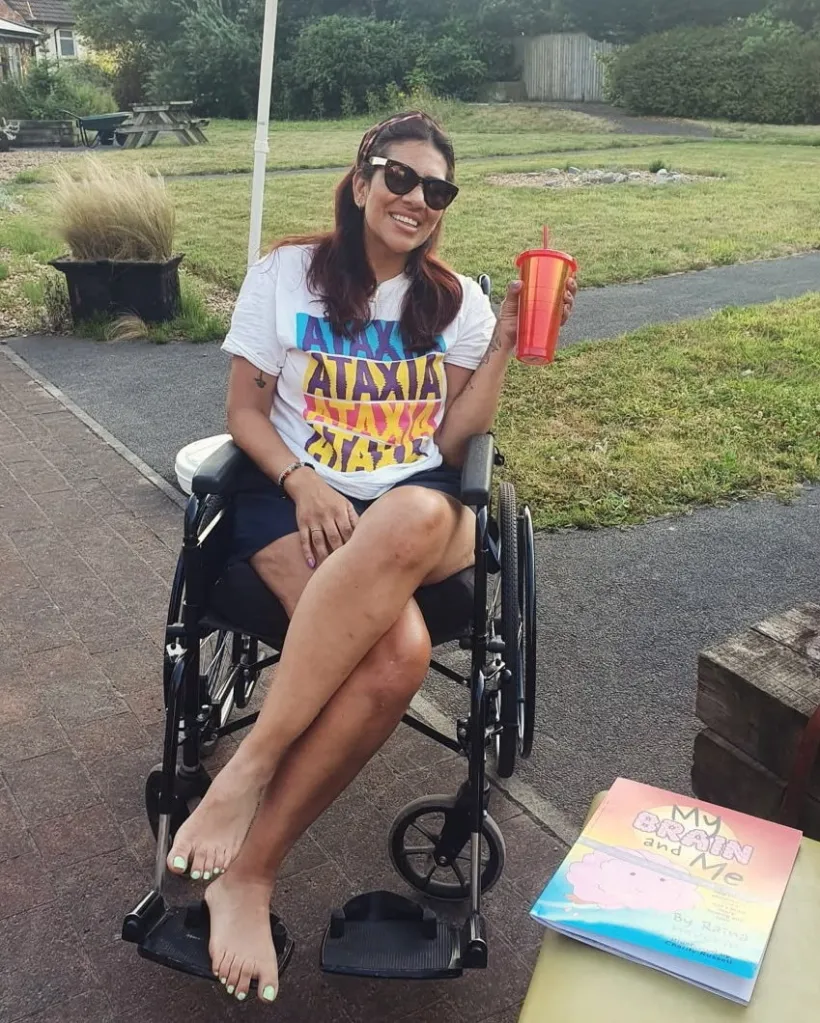
After more than two months in hospital in Paris, Heverin was strong enough to return to the UK on 11 June 2025. She spent a week at Whiston Hospital, followed by five months of intensive rehabilitation at Broadgreen Hospital. In November 2025 she transferred to a specialist brain injury unit (Oak Vale Gardens / The Priory), where she continues to live. She receives daily physiotherapy and speech therapy several times a week. Although she can now walk short distances with the support of one or two physiotherapists, she remains largely wheelchair-bound. Tremors in her hands, body and throat make everyday tasks — applying makeup, holding a cup of coffee, carrying objects — extraordinarily difficult.
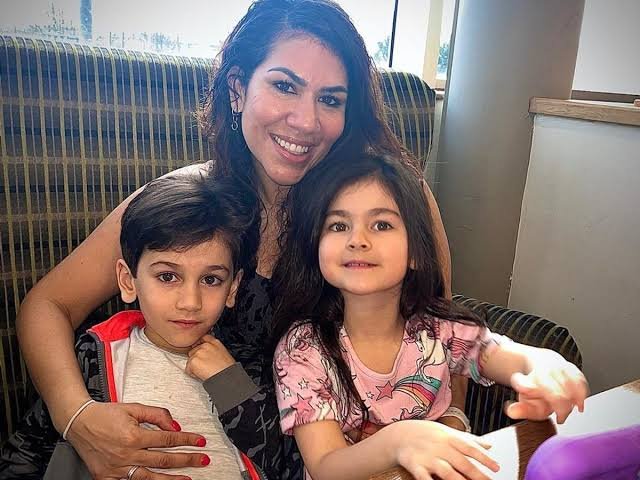
Before the accident, Heverin was a highly active entrepreneur who ran two businesses (including a recruitment firm she founded with her husband) while raising her children, Cian (now nine) and Aaliyah (now eight). She regularly ran 10Ks for pleasure and prided herself on her energy and independence. Today she can only visit her family at weekends. She has spoken openly about still grieving the life she lost — the school runs, the bedtime cuddles, the simple routines of motherhood, and the effortless ability to move and speak without conscious effort.
Yet her determination remains striking. She has written a children’s book to help her son and daughter understand her brain injury and why their mother has changed. She completed a “Coma to 5K” challenge, walking the equivalent of three miles (or around 5 km) over five days — sometimes described as 40 laps of a garden — and raised more than £3,000 to £4,000 for The Brain Charity, a Liverpool-based organisation that supports people with neurological conditions. A separate crowdfunding appeal organised by her friend Rachel Bryan has raised over £46,000 to help cover home adaptations, specialist equipment, ongoing physiotherapy, and carer support.
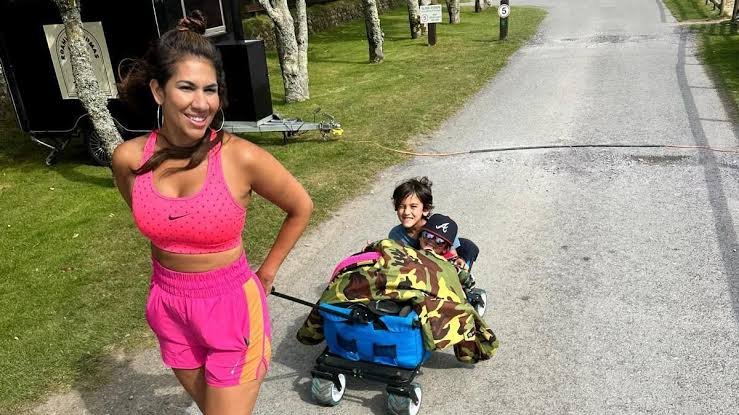
Heverin has said she feels both lucky and unlucky at the same time. The world continued turning while she was in hospital, and she sometimes still feels as though she is living in 2025. She is realistic that full recovery may take years and that she may never return completely to her former self. At the same time she insists on looking forward: “Don’t give up, keep going. You’re going to have some bad days, but you’re going to have good days too. There’s a life that’s worth living.”
Her story has drawn attention across British and international media as both a cautionary tale about the unexpected dangers of sleepwalking in unfamiliar environments and an example of resilience in the face of sudden, life-changing injury.
Sources: New York Post , BBC News.