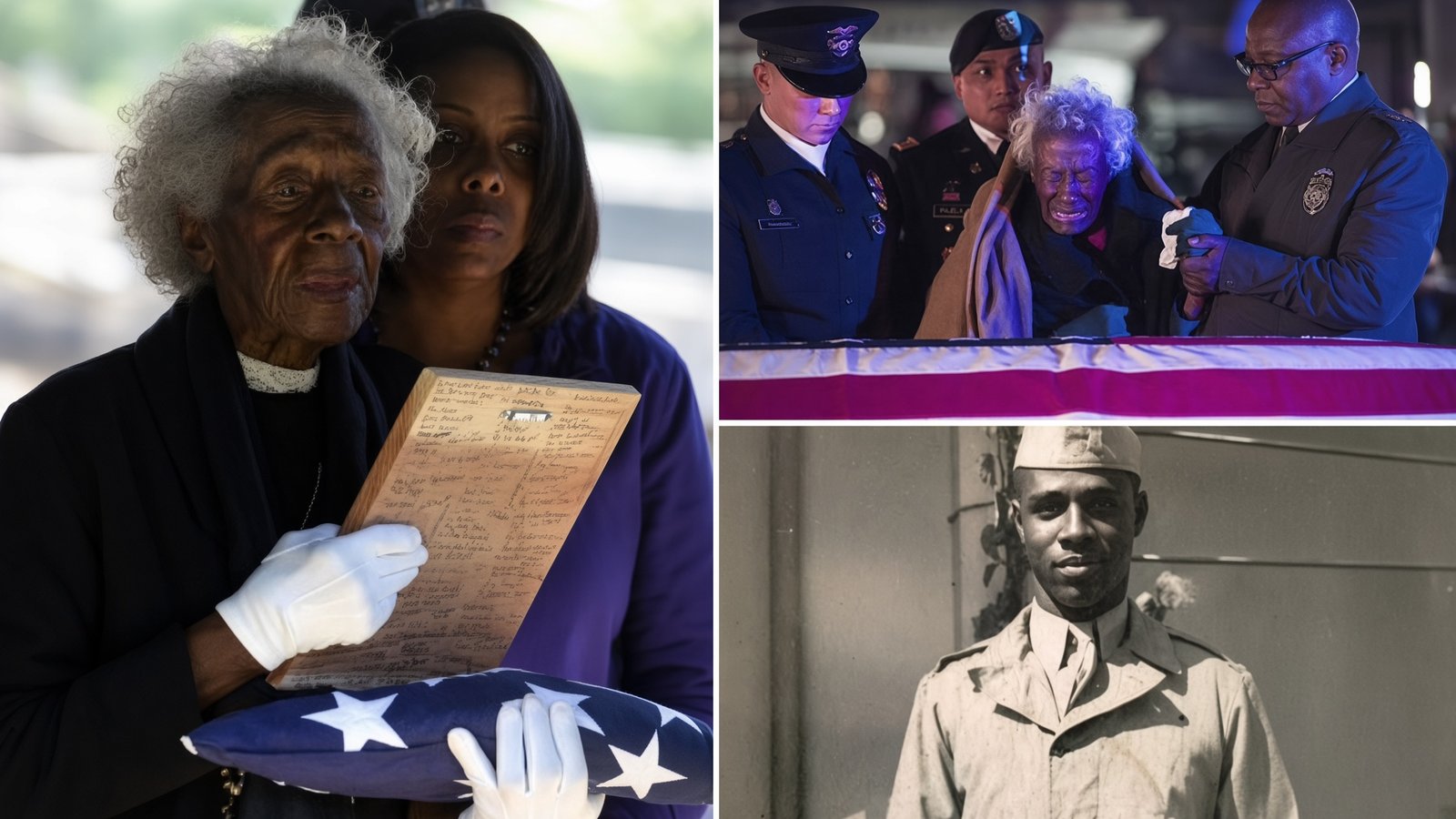
For more than six decades, Clara Gantt lived with a question that had no answer. Her husband, U.S. Army Sgt. 1st Class Joseph Gantt, had disappeared in 1950, leaving behind a young wife who never received the certainty that so many families take for granted: knowing where a loved one died and having a place where they could finally be laid to rest.
Clara waited through years of uncertainty. She never remarried and continued to keep memories of Joseph close to her. Even as the decades passed, she refused to believe that the absence of his remains meant the end of his story.
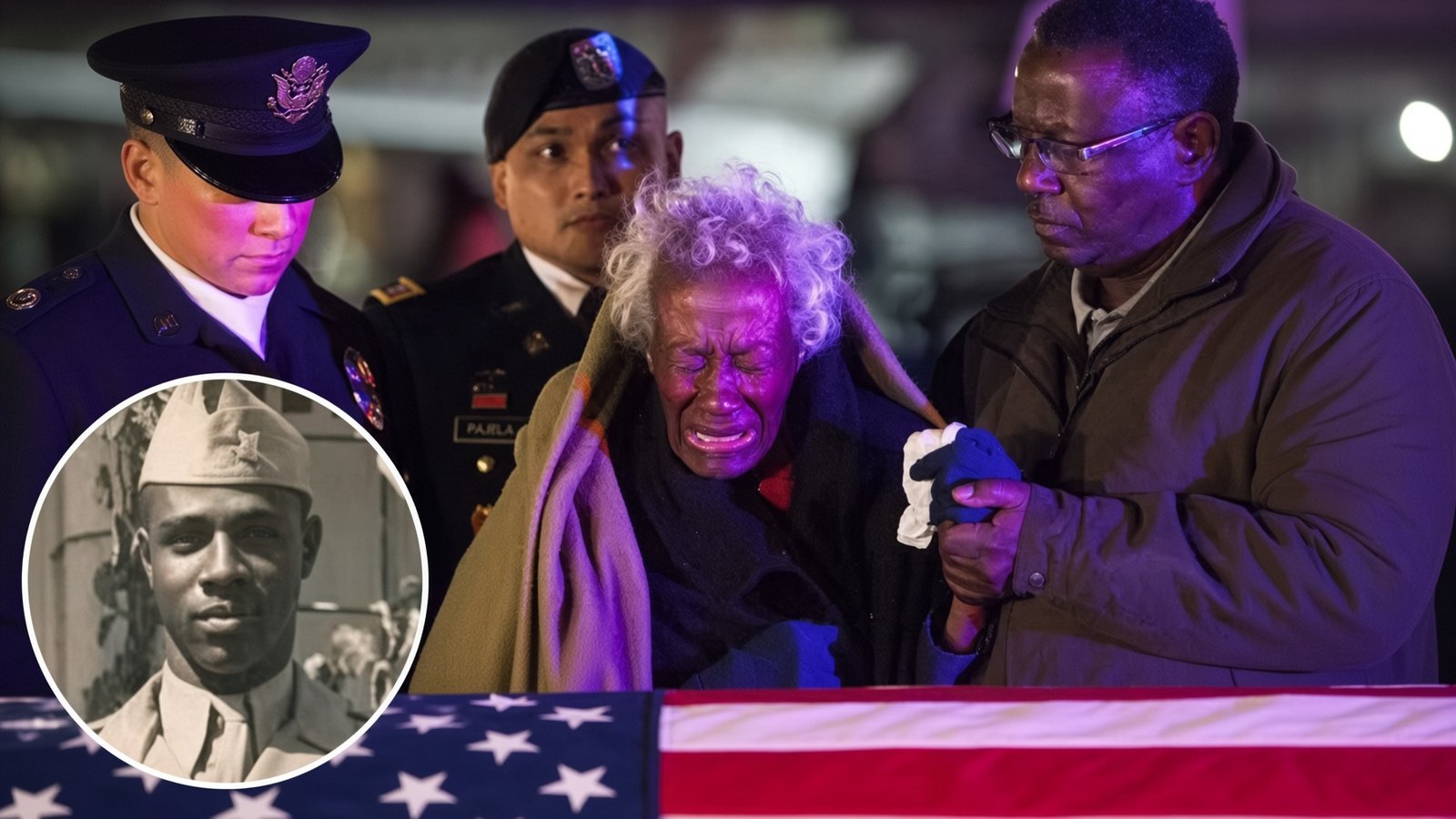
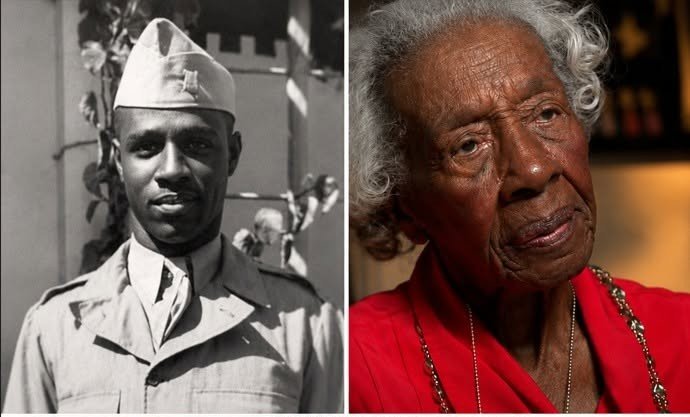
Joseph Gantt had already served during World War II before he was sent to Korea. In 1950, he was serving as a field medic with the U.S. Army when he disappeared during intense fighting near Kunu-ri in North Korea. He was reported missing on November 30, 1950.
Information later provided by former prisoners indicated that Gantt had been captured and eventually died in captivity in 1951. But knowing that he had likely died was only part of the mystery. His remains were still missing, leaving Clara and his family without a definitive place to mourn him.
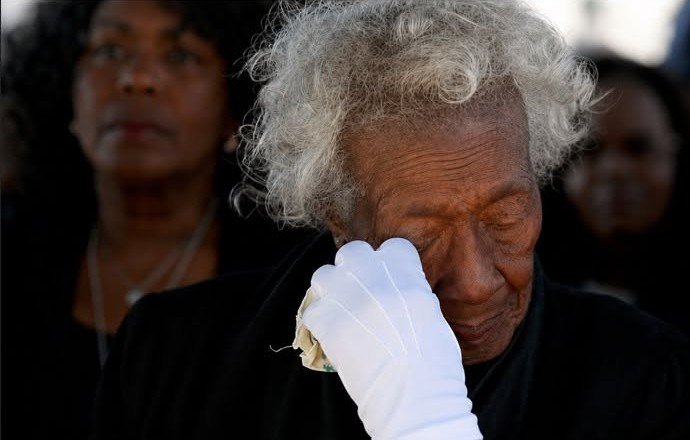
For decades, his name remained among the American service members whose fate had not been fully resolved.
Then, more than half a century later, forensic investigators received remains that could potentially belong to missing American personnel. Advances in identification technology allowed specialists to revisit cases that had remained unresolved for generations. Dental evidence and DNA analysis ultimately helped investigators establish that the remains belonged to Joseph Gantt.
The discovery brought an extraordinary moment of closure for Clara.
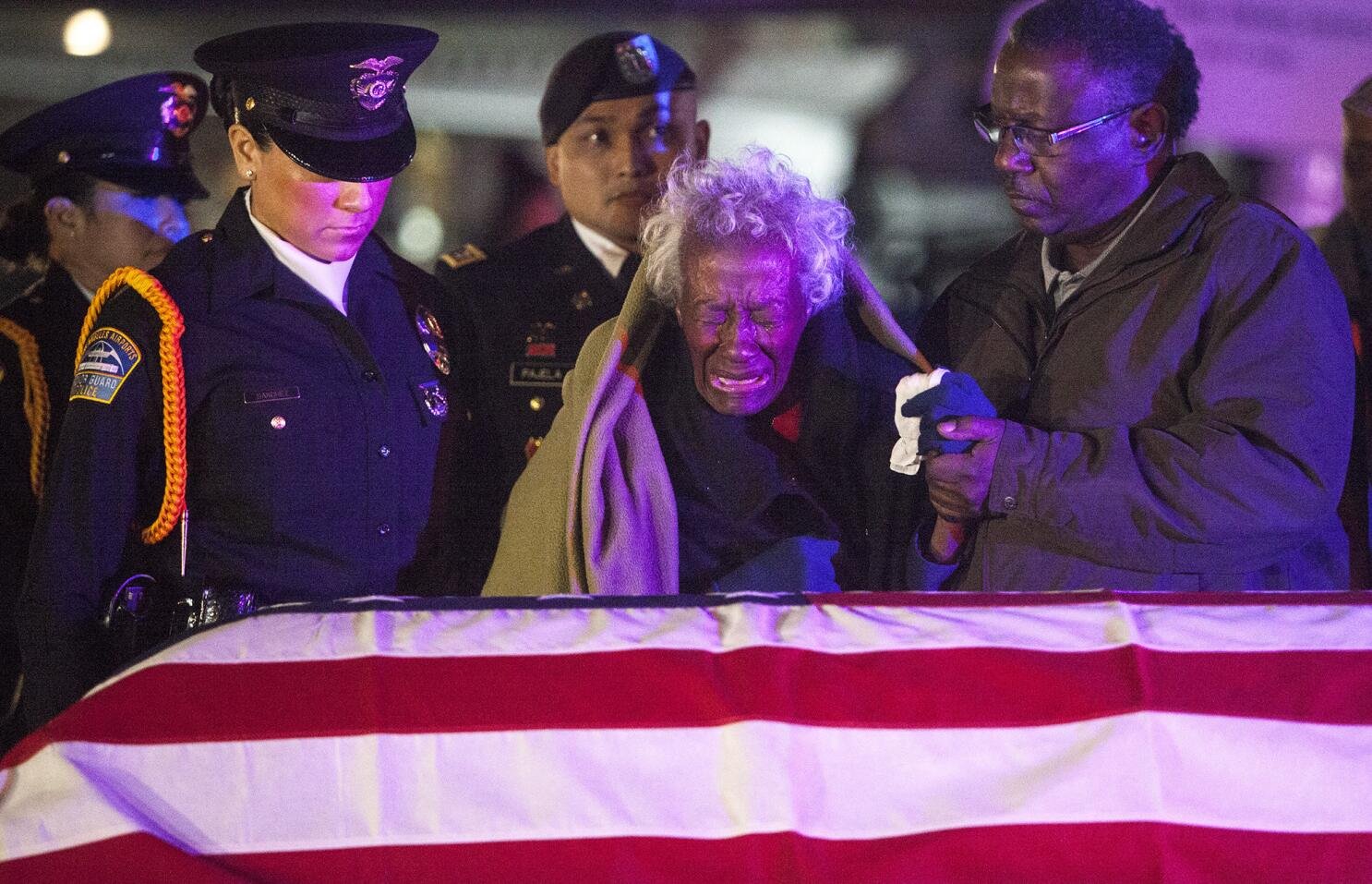
In December 2013, Gantt’s remains were returned to Los Angeles. Clara, then 95, was waiting at Los Angeles International Airport when the flag-draped coffin carrying her husband’s remains arrived.
It was a moment she had imagined for more than 60 years, although reality was far more painful than the reunion she once might have hoped for.
Joseph was finally home, but he was coming back to her as a fallen soldier rather than the husband she had spent decades hoping to see again.
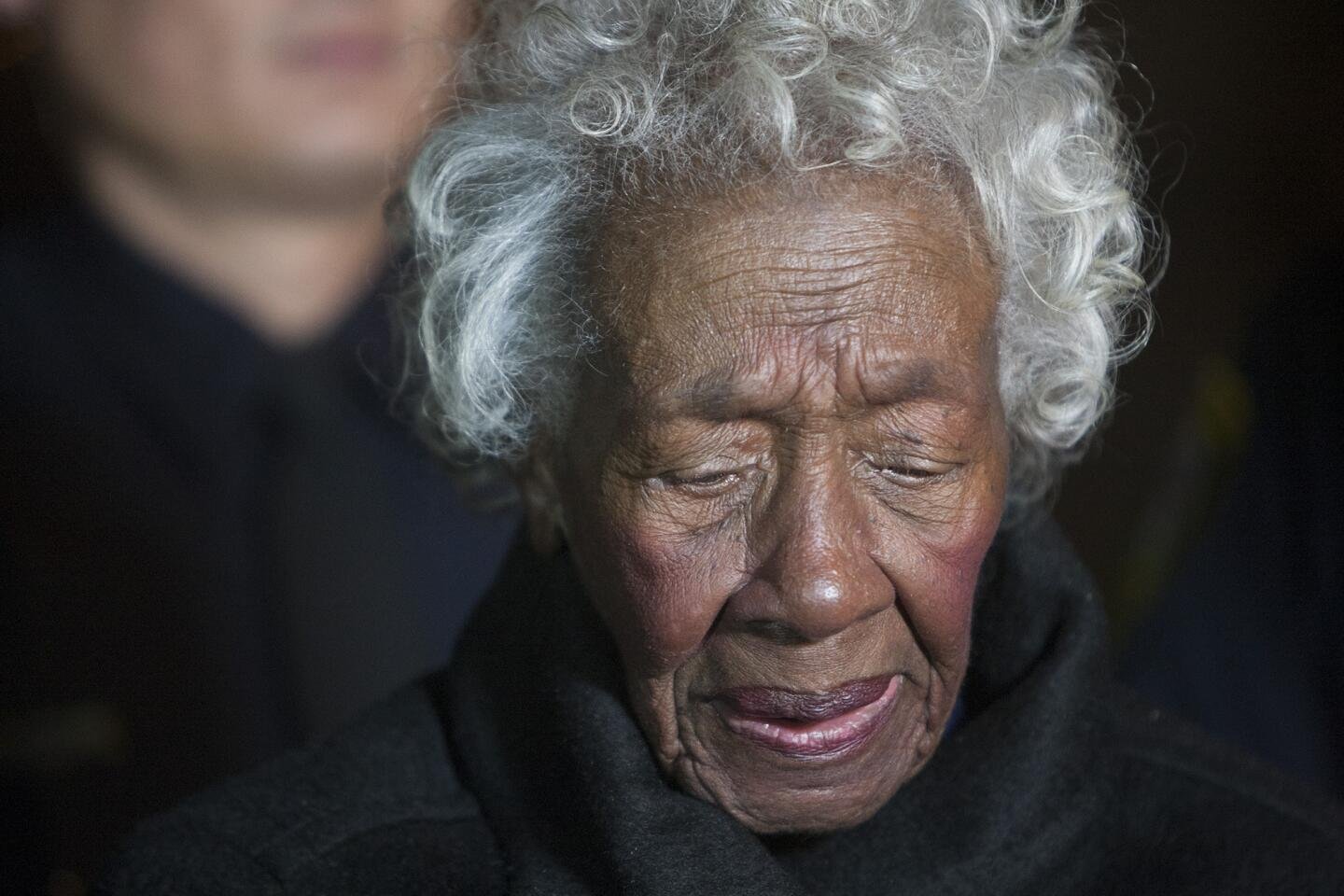
Clara remained devoted to him throughout the long years of uncertainty. She later explained that Joseph had once told her that if something happened to him, she should remarry. She refused, telling him that she would remain his wife.
That promise became one of the most moving parts of the story.
When she finally stood beside his coffin, Clara made it clear that the passage of time had never erased her feelings for him. She had waited because she believed that one day there would be an answer.
Now there was.
Joseph Gantt’s remains were later buried with military honors in California. The ceremony gave Clara something she had been denied for most of her adult life: the ability to say goodbye properly and to know exactly where her husband had been laid to rest.
The story also illustrated the enormous importance of the work being done to identify missing American service members. Thousands of families have spent decades without knowing exactly what happened to relatives who never returned home. For many of them, the uncertainty can last longer than a lifetime.
Scientific advances have changed what is possible. DNA testing, dental comparisons and other forensic techniques have allowed investigators to revisit unidentified remains and connect them with families long after the original disappearance.
Joseph Gantt’s identification was one of those cases where time did not prevent the truth from eventually emerging.
For Clara, however, the story was never primarily about forensic science or military records. It was about a husband she had loved and a promise she had kept.
She had spent most of her life without knowing where Joseph was. She had no grave to visit and no confirmed place to leave flowers. She could only hold on to memories and hope.
After 63 years, she finally had both an answer and a place to say goodbye.
The emotional images from his return captured the extraordinary weight of that moment. Clara was an elderly woman when Joseph finally came home, but the years had not erased the young woman who had once watched her husband leave.
The homecoming could not give her back the decades they had lost. It could not change what had happened to Joseph or restore the life they might have shared together.
But it gave Clara something that had been missing for most of her life: certainty.
Joseph was no longer simply a name on a list of missing service members.
He was home.
And after 63 years of waiting, Clara could finally lay her husband to rest.
Sources: https://www.nbcnews.com