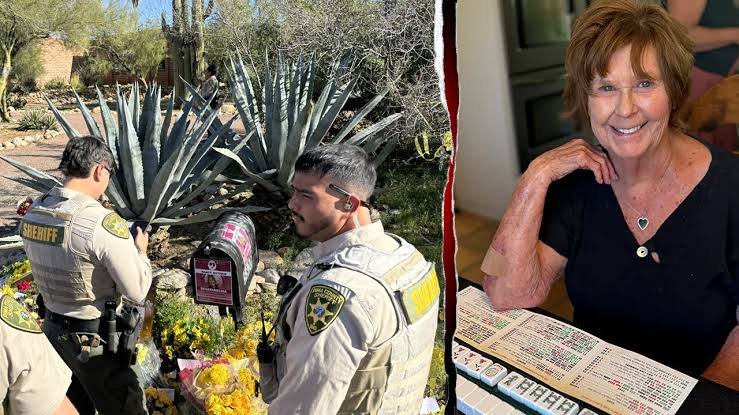
The investigation into the disappearance of Nancy Guthrie has entered another important phase after authorities reported a modest increase in tips following the public release of two ransom notes connected to the case. More than six months after the 84-year-old Tucson woman disappeared from her home, investigators are still searching for answers, while the newly released letters are giving the public another opportunity to recognize potentially significant details about the person who wrote them.
The Pima County Sheriff’s Department said investigators with the Nancy Guthrie Task Force have seen a “slight increase” in tips since the two letters were released on July 31. Authorities said that every tip received so far has been followed up on, although none has yet produced the breakthrough needed to determine what happened to Guthrie or identify the person responsible for her disappearance.
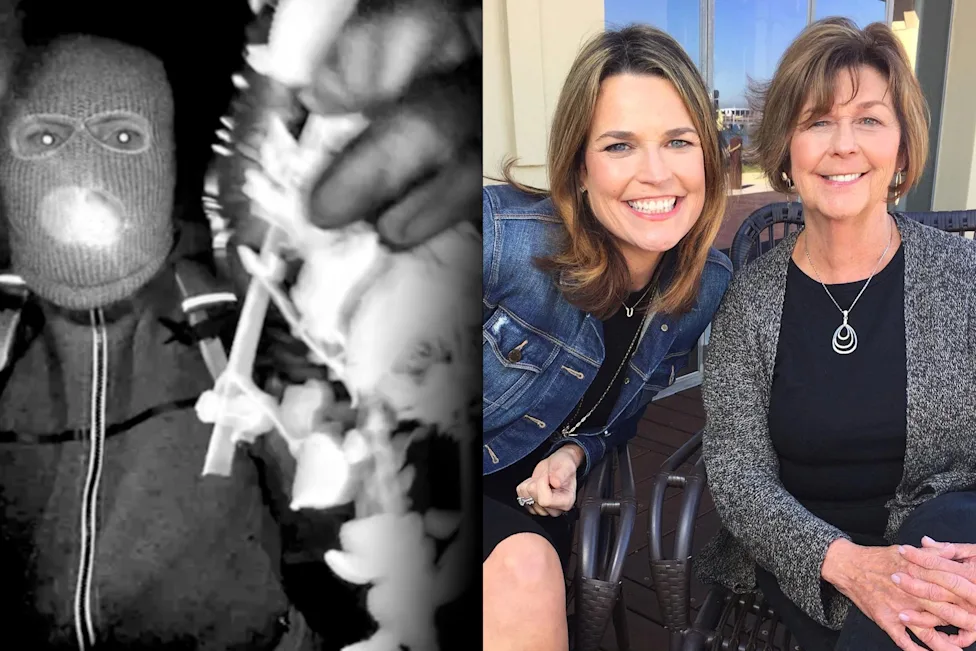
Guthrie, the mother of NBC “Today” co-anchor Savannah Guthrie, disappeared from her Tucson-area home in the early hours of February 1. Investigators have treated the case as a kidnapping and have continued to work with the FBI and other agencies in an effort to locate her and determine who entered her home that night.
The release of the ransom letters was an unusual but deliberate investigative decision. Rather than keeping the documents entirely within law enforcement, investigators decided that making their contents public could potentially help identify the writer. Detectives are particularly interested in the language, spelling, phrasing and writing habits used in the messages. Someone who has known or worked with the author could potentially recognize those characteristics even if the person’s identity is not immediately obvious.
The first letter was sent to a Tucson television station on February 2, one day after Guthrie disappeared. The writer claimed that Nancy was being held and said she was “safe but scared.” The message demanded millions of dollars in Bitcoin and established a series of deadlines for payment. It threatened that Guthrie would be killed if the ransom was not paid.
The letter also contained details that investigators found significant. Among the information referenced was a white smartwatch near Guthrie’s bed and a damaged floodlight in the backyard. Those details were not widely known when the message was sent, raising questions about how the writer obtained the information and whether the person had direct knowledge of what happened inside the home.
The second letter arrived several days later and presented an entirely different account. Instead of continuing to demand money for Guthrie’s release, the writer claimed that she had died shortly after being taken and that her body had been “buried in nature.” The author said the death had not been intentional and offered an apology to the family.
That second message has created some of the most disturbing questions in the investigation. If the writer was genuinely involved in Guthrie’s disappearance, the letter could potentially contain information about her fate. But authorities have not verified the claim that Guthrie died, and her remains have not been found. The letter therefore cannot be treated as proof that she is dead.
The authenticity of communications associated with the case has also been a complicated issue from the beginning. In July, Reuters reported that the FBI had determined that three other messages connected to the disappearance were fake. According to that reporting, the FBI’s assessment applied to two earlier ransom notes and another message from someone claiming to know the identity of the kidnappers. At the same time, federal authorities continued to describe the overall investigation as a kidnapping-for-ransom case.
That history makes the two letters released on July 31 particularly important. Investigators have treated them differently from communications that were previously identified as fraudulent, and authorities have sought public assistance in examining their contents. Nevertheless, the fact that investigators consider a communication potentially useful does not mean every claim within it has been proven true.
Experts have also pointed out that ransom communications can contain both genuine information and deliberate deception. A person trying to manipulate investigators could use publicly available information or details obtained from another source to make a message appear authentic. Conversely, an unusual detail that was not public at the time could potentially provide investigators with a valuable clue.
That is one reason investigators are interested in more than the demands themselves. The way the letters were written may be just as important as what they said.
Forensic experts can examine linguistic patterns, including vocabulary, sentence structure, spelling mistakes and other characteristics that may reveal something about an unknown writer. Such analysis cannot normally identify a suspect by itself, but it can potentially help investigators narrow their search or connect the writing to another communication.
The recent increase in tips suggests that authorities’ decision to release the letters has had at least some effect. Members of the public may now be noticing details that investigators could not reasonably expect to identify on their own. A person might recognize an unusual phrase, remember someone who used similar wording or recall a conversation that seemed insignificant at the time but now appears relevant.
The Pima County Sheriff’s Department has emphasized that the new tips are being taken seriously. Investigators said that the information coming in after the release is being reviewed and followed up on rather than simply added to a growing database.
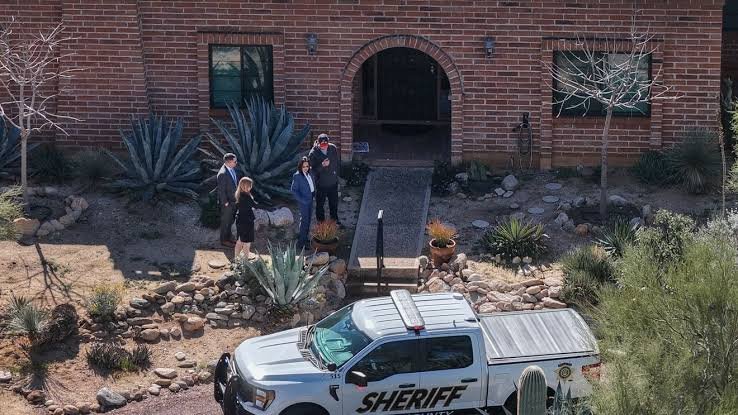
Still, officials have not announced an arrest or identified a suspect publicly.
That remains one of the most significant facts about the case more than six months after Guthrie disappeared. Despite extensive searches, surveillance footage, forensic work and a continuing federal investigation, Nancy Guthrie has not been located.
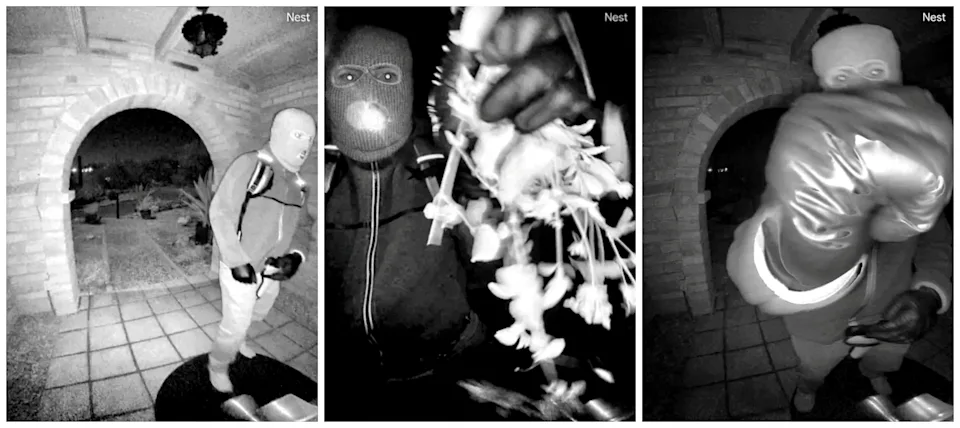
Investigators previously released surveillance images showing a masked individual near Guthrie’s home. The person appeared to be carrying a backpack and what investigators described as a firearm. Authorities said the individual appeared to interfere with the home’s video doorbell. The FBI later released additional footage in an effort to identify the person.
Evidence recovered at the residence also contributed to investigators’ belief that Guthrie did not simply leave voluntarily. Blood found at the home was determined through forensic testing to belong to Nancy Guthrie. Authorities have consequently continued to treat the disappearance as a criminal case rather than an ordinary missing-person investigation.
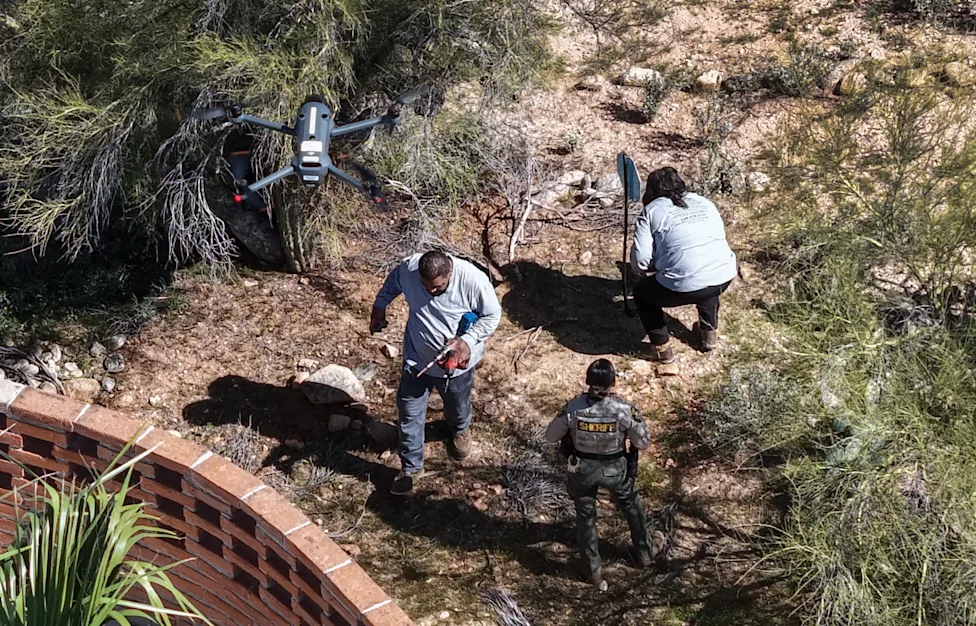
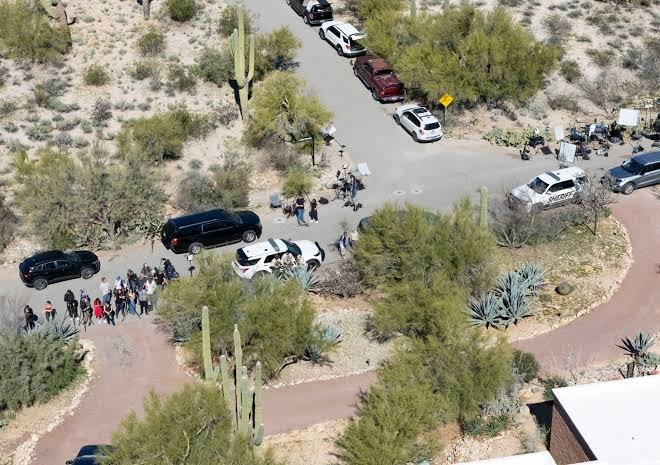
The search has also continued beyond the immediate area surrounding Guthrie’s residence. Recent reporting has indicated that FBI personnel returned to the neighborhood following severe monsoon weather in the Tucson area. The renewed activity has prompted speculation that changing environmental conditions may have exposed or moved material that investigators previously could not see. Authorities, however, have not publicly said that a new discovery led to the renewed activity.
Meanwhile, the Guthrie family continues to appeal to the public for help.
Savannah Guthrie has repeatedly urged anyone who knows something about her mother’s disappearance to come forward. The family has offered a reward of up to $1 million for information that leads to Nancy’s recovery, while the FBI has separately offered a reward for information connected to the case.
For the family, the uncertainty has been especially painful because there has been no definitive evidence publicly establishing what happened to Nancy after she was taken from her home.
The second ransom letter’s claim that she died has therefore been particularly difficult to process. It offers a possible explanation, but it does not provide the physical evidence necessary to establish her fate. Until investigators locate Nancy or obtain evidence independently confirming what happened to her, the family remains caught between hope and fear.
The case has also generated controversy over the relationship between federal and local investigators. Recent reporting has raised questions about how quickly federal resources became involved during the early stages of the investigation and whether opportunities were missed. Officials from the Pima County Sheriff’s Department and the FBI have offered differing accounts about aspects of their early cooperation, creating additional scrutiny around an investigation that has yet to produce an arrest.
Despite those disagreements, investigators continue to emphasize that the case remains active.
The latest increase in tips may therefore be modest, but it is still significant. In a case where investigators have spent months trying to reconstruct a person’s movements and identify an unknown suspect, even one credible new piece of information can potentially change the direction of the investigation.
The challenge is determining which tips contain genuine information and which are speculation, misinformation or attempts to attract attention. The enormous public interest in Nancy Guthrie’s disappearance has produced a flood of theories online, making verification more important than ever.
Authorities have repeatedly urged people with actual information to contact investigators rather than posting accusations on social media. An unverified theory may spread rapidly online but contribute little to an investigation unless it can be supported by evidence.
The ransom letters themselves illustrate that distinction perfectly. They contain specific details that investigators consider potentially significant, but they also make claims that remain unverified. Their existence raises questions without necessarily answering them.
Who wrote the letters? How did that person know details about Nancy’s home? Was the writer actually involved in the disappearance, or did someone obtain information through another source? Why was the second letter sent? And, most importantly, where is Nancy Guthrie?
Those questions remain unanswered.
For now, investigators appear to be hoping that the public release of the letters will accomplish something that months of investigative work have not yet achieved: connecting an anonymous writer to a real person.
The slight increase in tips is an early indication that the strategy has generated additional information. Whether any of those tips ultimately leads investigators to Nancy or to the person responsible for her disappearance remains unknown.
What is clear is that the investigation has not been closed or abandoned. The FBI and Pima County Sheriff’s Department continue to pursue leads, review evidence and ask the public for assistance.
More than six months after Nancy Guthrie disappeared, her family is still waiting for the answer that matters most.
Where is Nancy?
Until investigators can answer that question, the ransom letters will remain what they are today: potentially important pieces of evidence surrounded by uncertainty, clues that may eventually help solve the mystery but that, by themselves, cannot establish what happened to her.
Sources: https://nypost.com